
Asbestos Testing FAQs

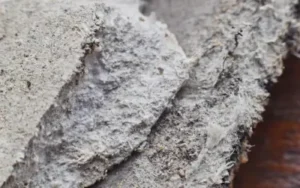
old roofing tiles show asbestos fibersAsbestos and asbestos testing are confusing subjects for many homeowners. While you may realize that testing is important, you may not understand why or how to conduct it properly.

We’ve put together these helpful Asbestos Testing FAQs to help you navigate the process. If you don’t find your answers here, please be sure to give us a call, and we’ll be happy to help.

We’ve divided them into three sections representing the three phases a typical homeowner goes through during the process:


General Asbestos FAQs

Let’s start with some general questions about asbestos. What even is asbestos? How did it come to exist in so many houses? And why is it a problem?

In this section, we’ll answer some general questions about asbestos right up until you call us for testing.
 

What is asbestos?

Asbestos is a group of naturally occurring silicate minerals that were once prized for their extreme durability, flexibility, and resistance to heat and fire.

Because it was so effective as an insulator, it was woven into fabrics or mixed into cement and plastics for decades.


In its heyday, asbestos was considered a “miracle mineral.” Its benefits were purely industrial: it provided excellent fireproofing, chemical resistance, and tensile strength.

With how inexpensive and effective it was, it became a standard material in countless building projects across the U.S.


Asbestos is a known carcinogen. The danger arises when “friable” (crumbly) materials are disturbed, releasing microscopic fibers into the air. When inhaled, these fibers can become trapped in the lungs, potentially leading to serious long-term health issues. The most common include:

  • Asbestosis
  • Lung cancer
  • Mesothelioma


If your home is in the Portland or Vancouver metro area and hasn’t been fully gutted and renovated, there is a high likelihood it contains some asbestos. It is especially common in homes built before 1981, though it was used in some products into the 1990s.

If original flooring, popcorn ceilings, or pipe wrap are still present, testing is the only way to be sure.

For more information, check out our in-depth article >> How Do You Know If You Have Asbestos?


Yes. In both Oregon (DEQ) and Washington (LRAPA/Southwest Clean Air Agency), regulations generally require a thorough asbestos survey by a certified inspector before any renovation or demolition activities, regardless of the age of the home.

This ensures that workers and neighbors aren’t unknowingly exposed to airborne fibers.


Asbestos can be “hidden” in over 3,000 different products. The most common culprits we see include:

  • Popcorn ceilings and decorative textures.
  • Vinyl floor tiles (especially 9”x9” tiles) and their adhesive (mastic).
  • Pipe and duct insulation (often looking like white corrugated paper).
  • Exterior siding and roofing shingles.
  • Sheetrock mud/joint compound.


Testing for Asbestos FAQs

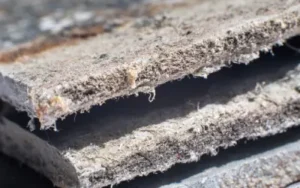
building materials being tested for asbestos in Portland ORIf you’re at the stage where you’re considering your asbestos testing options, there are a few things you should know.

For accurate results, asbestos testing has to be done the right way. If you use a DIY asbestos testing kit or go with a discounted service from an inexperienced company, you risk getting inaccurate results, which harm you in the long run.

This section covers what you need to know about professional asbestos testing, and how we do it here at Atlas Labs.
 

How does the asbestos testing process work?

Our AHERA-certified inspectors conduct a visual assessment of the area and collect “bulk samples”—small pieces of the suspect material.

These samples are then sealed in airtight containers and sent to a certified laboratory, where they are analyzed under a microscope to identify the specific type and percentage of asbestos present.


You should test whenever you plan to disturb building materials (remodeling, knocking down a wall, or scraping a ceiling) or if you notice materials are deteriorating or water-damaged.

Testing is also a standard part of the due diligence process during a real estate transaction.


If the lab confirms the presence of asbestos, we provide you with a detailed report of the findings. Please note: We specialize exclusively in testing and do not offer abatement or removal services.

This ensures our results are 100% objective—we have no financial interest in “finding” asbestos just to sell you a costly cleanup.


Yes. Many homeowners worry that taking a sample will contaminate their air. Our inspectors follow strict safety protocols, including wetting the material to prevent fiber release and immediately sealing the sample area.

The real danger is not the test itself, but living in a home where asbestos-containing materials are being unknowingly disturbed by foot traffic or airflow.


While DIY kits exist, they have significant drawbacks. Professional testing ensures:

  1. Legal Compliance: Most jurisdictions require a certified pro for permit-related surveys.
  2. Safety: We know how to sample without contaminating your home.
  3. Accuracy: We know exactly which layers of a material (like sub-flooring) need to be tested.
  4. Liability: A professional report provides a “paper trail” that protects you during a home sale or renovation.


No, you do not need a permit to have your home tested. However, you will often need the results of that test to obtain your renovation or demolition permits.


We offer affordable, competitive rates. The total cost depends on a few factors:
  • The number of samples required.
  • The size of the area being tested.
  • How quickly you need the results.

If you need an accurate estimate for your project, we’re happy to provide one. Contact us today and let us know the details!

The on-site sampling usually takes 1–2 hours. Once at the lab, our standard turnaround time is five business days. If you are on a tight deadline, we offer Next Day, 2-Day, and Rush services to get you moving quickly.


No. You are welcome to stay in the home while we work. We focus on specific areas and use localized containment methods to ensure the process is non-disruptive.


While no test is 100% infallible, we pride ourselves on providing you with the accurate results you need. Our inspectors are highly experienced in representative sampling, ensuring the lab gets exactly what they need for an accurate analysis.

False results are usually a product of poor sampling and are much more common with DIY testing. One example of how this happens is a DIYer only grabbing the top layer of a multi-layered floor and assuming this qualifies as a representative sample.


In a standard inspection, we perform sample testing of materials to see if they contain asbestos.

We can also perform air monitoring, which measures the concentration of fibers currently floating in the air. Bulk sampling is usually for pre-renovation, while air monitoring is often used after a cleanup to ensure the air is safe to breathe.


Our asbestos laboratory uses state-of-the-art testing methods like advanced microscopy to accurately identify asbestos in various materials.

Whether you collect the sample and drop it off or our licensed inspectors do, you can be sure we’ll use the most advanced and accurate methods to complete your testing.


Asbestos Remediation and Abatement FAQs

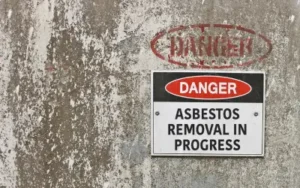
sign cautioning that asbestos removal is in progressIf you’ve completed your testing and it reveals the presence of asbestos, the next step is removing it.

Please note that we don’t offer asbestos remediation or abatement services at Atlas Labs. It’s standard in the environmental testing industry, so you can be sure you only ever work with one company that handles all of the testing and another that does abatement and remediation, so you can be sure you’re always getting the most accurate and honest results.


If we find asbestos, do you do asbestos abatement?

No. We are strictly a testing firm.

By keeping testing and removal separate, we provide an essential “check and balance” for our clients, ensuring that your results are honest and unbiased.


An asbestos report will never affect the value or desirability of your property. However, the presence of asbestos might.

An asbestos report doesn’t “create” a problem; it simply identifies what is already there. In modern real estate, transparency is key. Having a professional report ready for buyers often builds trust and prevents a deal from falling through at the last minute due to a “surprise” discovery.


Not necessarily. If the material is in good condition and won’t be disturbed, it is often safer to leave it alone or “encapsulate” it (seal it behind a permanent barrier). Removal is generally only required if the material is damaged or if it stands in the way of a planned renovation.


After your asbestos abatement or remediation is complete, there’s one final step before you’re ready to move on to the next stage of your renovation or construction project.

Clearance testing is one final step that will determine if it was successful and your home or business is free of asbestos. After you pass your asbestos clearing testing, we’ll provide you with the documented proof that the structure is asbestos-free.


Got Questions About Asbestos Testing in Oregon & Washington? Call Us!

With decades of experience performing expert asbestos testing in Oregon and Washington, we understand the ins and outs of this sometimes complicated field. If you still have questions, don’t worry – we’re here to help!

Give Atlas Labs, Inc. a call anytime and speak with one of our friendly experts. We’re looking forward to speaking with you.


Asbestos Testing FAQs in Vancouver WA, Portland OR, & Salem OR

Atlas Labs delivers the most accurate asbestos and lead paint testing throughout Oregon and Washington.

Portland OR | Salem OR | Gresham OR | Beaverton OR | Hillsboro OR | Tigard OR

Vancouver WA | Camas WA | Battle Ground WA | Orchards WA | Ridgefield WA

Contact UsReviews
