
How XRF Lead Testing Works

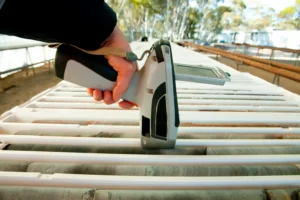
An Atlas Labs technician using an XRF analyzer to test for lead

As lead testing experts, we’ve seen firsthand how worried property owners get when they suspect lead paint in their buildings. X-Ray Fluorescence (XRF) lead testing is one of the most reliable and quickest ways to detect lead on surfaces.

Even small amounts of lead dust can cause permanent health damage. Children are especially vulnerable, as lead affects brain development and can cause learning disabilities. For adults, lead exposure can damage organs and cause high blood pressure.

Unlike traditional testing methods that require you to chip off paint samples and wait days for lab results, XRF testing gives you an accurate reading in seconds. Using a handheld XRF device, professionals (like us at Atlas Labs, Inc.) can test multiple areas quickly without damaging your walls or waiting for results. This means you get the answers you need to protect your family or employees from lead exposure immediately.

What is XRF lead testing?

XRF is a testing method that uses special x-ray technology to identify lead in painted surfaces. The x-ray beam is highly focused and only activated when pressed against a surface. Think of it like a sophisticated scanner that can “see” through layers of paint to detect lead content instantly. 

When the XRF device sends x-rays into a painted surface, it detects lead at any depth, even under multiple coats of newer paint. The device sends out x-rays that bounce back differently depending on what elements are present. 

For both homes and businesses, this technology has been a game-changer. We can test dozens of surfaces in a single visit, giving you a complete picture of where lead might be hiding in your property. The radiation exposure from an inspection is less than you’d receive from a dental x-ray.

What does it measure?

XRF technology measures the amount of lead in each layer of paint on your walls, doors, windows, and other surfaces. It also identifies other heavy metals that could pose health risks in your environment.

The XRF analyzer measures lead content in milligrams per square centimeter (mg/cm²). According to EPA standards, any reading of 1.0 mg/cm² or higher is considered lead-based paint. 

This precision matters because different areas of your property may have different lead levels. Cabinets might test negative while window frames test positive. Door frames might have high lead content while walls are clean. XRF testing maps out exactly where lead hazards exist in your space.

XRF Lead Testing vs Sample Lab Analysis

How lab analysis testing works:

  • Safely scraping off a paint chip and placing it in a sealed container
  • Filling out a chain-of-custody form at a drop-off location
  • Testing by a lab technician (using various methods)
  • Results going through review and approval before being formatted into a final report

How XRF testing works:

  • A professional placing the analyzer directly against the painted surface
  • The analyzer detecting unique energy signatures and calculating exactly how much lead is present
  • The device displaying results immediately on its screen, showing lead content in mg/cm²

FAQs

When do you need XRF lead paint testing?

Here are the most common situations where XRF lead paint testing becomes essential:

For homeowners:

  • Before renovating or remodeling older homes (especially pre-1978)
  • When buying or selling a property
  • If you have young children or are planning a family
  • When paint is peeling, chipping, or deteriorating
  • After discovering your child has elevated blood lead levels

For business owners:

  • Before tenant improvements or renovations
  • To comply with EPA RRP (Renovation, Repair, and Painting) rules
  • When required by insurance or lending institutions
  • For daycare centers, schools, or healthcare facilities
  • To protect employees and customers from lead exposure

Modern XRF analyzers are incredibly precise when used by trained professionals. XRF devices can detect lead levels as low as 0.1 mg/cm2, well below the federal action level. The accuracy rate is typically above 95% when properly calibrated and operated. False negatives are extremely rare with professional-grade equipment.

XRF lead paint testing is completely safe for you, your family, and your pets when performed by trained professionals. For businesses, XRF testing can be performed during operating hours without disrupting your work. 

The equipment is quiet and the process is quick, minimizing any impact on your daily operations.

Let Us Handle Your Testing

When you need to know if lead hazards exist in your property, you can’t afford to wait or wonder. We understand the stress of dealing with potential lead hazards. That’s why we make the testing process as simple as possible with on-site testing or lab analysis (when you drop off a sample).

Whether you’re planning renovations, buying a property, or simply want peace of mind, professional XRF testing gives you the answers you need. Our certified XRF lead testing services provide the fast, accurate results you need to protect your health and comply with regulations.

Contact us today to schedule your XRF lead testing or find our list of drop-off locations here.

Back to Lead Testing Services

How XRF Lead Testing Works in Vancouver WA, Portland OR, & Salem OR

Atlas Labs delivers the most accurate asbestos and lead paint testing throughout Oregon and Washington.

Portland OR | Salem OR | Gresham OR | Beaverton OR | Hillsboro OR | Tigard OR

Vancouver WA | Camas WA | Battle Ground WA | Orchards WA | Ridgefield WA

Contact UsReviews
