
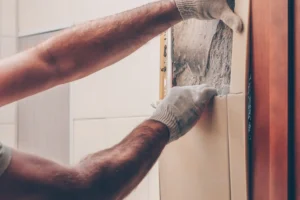
Where exactly asbestos is found depends on when your home was built. It can be anywhere from your basement to your rooftop in flooring, walls, ceilings, and insulation.
Homes, offices, and other buildings constructed before 2004 may still contain asbestos products, unless someone has already removed them. This is especially true for asbestos in Pacific Northwest homes, as many houses throughout Washington and Oregon were built during the peak years of asbestos use.
What Is Asbestos and Where Is It Found?
Asbestos is a naturally occurring material that was widely used in building materials for much of the 20th century. Builders loved it because it was strong, heat-resistant, and affordable. It showed up in everything from insulation, to floor tiles, to roofing materials.
The problem is we now know that breathing in asbestos fibers can cause serious health issues, which often don’t show up until many years after exposure. This makes asbestos particularly dangerous.
Here are the common places to find asbestos that we encounter most often in our testing work:
Insulation
Attic insulation is one of the most common places where asbestos is located in older buildings. So if your home was built or insulated before the 1980s, there’s a reasonable chance your attic insulation contains asbestos.
This becomes a concern when you’re thinking about adding more insulation, installing recessed lighting, or doing any kind of attic renovation. Older insulation products frequently contained asbestos because of its excellent heat-resistant properties.
Pipe and duct insulation is another area where asbestos is likely to be found. Builders wrapped hot water pipes, heating ducts, and boilers with asbestos-containing materials to prevent heat loss and reduce fire risk. You’ll often find this type of insulation in basements, utility rooms, and crawl spaces. The wrapping may look like corrugated paper, felt tape, or a cement-like coating around your pipes.
Walls and Ceilings
Drywall and joint compound from certain eras commonly contained asbestos. This presents a challenge because you can’t tell if your drywall contains asbestos just by looking at it. The danger comes when you drill into the wall to hang a picture, cut through drywall during a remodel, or sand joint compound during repairs.
Popcorn ceilings are another well-known location where asbestos can be found in homes. That textured ceiling finish that was so popular in the 1960s and 1970s often contained asbestos to add texture and fire resistance. Many homeowners today want to remove these dated ceilings for a more modern look, but scraping or sanding popcorn ceilings without proper testing can release dangerous fibers throughout your home.
Flooring
Vinyl flooring, including both sheet vinyl and vinyl tiles, frequently contained asbestos. This is especially true for the 9-inch by 9-inch tiles that were standard in homes built from the 1950s through the 1980s.
The adhesive used to install these tiles, as well as the backing of the sheets, often contained asbestos as well. Even if the top layer looks fine, the backing material underneath may contain asbestos that gets released when the flooring is torn up.
Less Obvious Areas
- Roofing and siding materials, particularly those made of cement, often contained asbestos.
- Cement shingles, roofing felt, and similar types of siding were manufactured with asbestos for added durability and fire resistance.
- Stovetop pads, fireplace surrounds, and other heat-resistant components around your home may contain asbestos.
- Like popcorn ceilings, textured paints and patching compounds could contain asbestos, and sanding or scraping these surfaces can release fibers.
Leave your information below and we will be in touch! Leave your information below and we will be in touch! "*" indicates required fieldsSchedule Your Environmental Testing Today!

Is Asbestos Still Present in Older Homes?
If your home was built before 2004 and no one has tested for or removed asbestos-containing materials, there’s a good chance those materials are still there. This doesn’t mean you need to panic. In most cases, asbestos materials that are in good condition and left undisturbed pose minimal risk.
The fibers only become dangerous when they’re released into the air, typically when materials are damaged, deteriorating, or disturbed during renovation work. The real concern comes when you want to repair, replace, or update parts of your home.
That’s when asbestos fibers can become airborne. This is exactly why testing before any renovation or demolition project is so important.
Home Renovation Projects: When You’re Most Likely Exposed to Asbestos
If you’re planning any renovation work in an older home, asbestos testing should be at the top of your to-do list.
- Attic renovations are particularly risky if insulation hasn’t been tested.
- The same goes for kitchen or bathroom remodels where you might encounter old flooring, wall materials, or pipe insulation.
- Plumbing projects can disturb asbestos-containing pipe insulation. Even a simple repair job can release fibers if the insulation crumbles or breaks apart.
- Drilling into drywall might seem harmless enough, but if that drywall contains asbestos, you’re putting yourself and your family at risk. The same applies to cutting, sanding, or removing drywall during renovations.
- Removing tile (whether floor or ceiling tiles) is another common way people encounter asbestos. Both the tiles themselves and the adhesive beneath them may contain asbestos materials.
Signs that Asbestos Materials Have Been Disturbed
How can you tell if asbestos-containing materials in your home have become a problem? Watch for these warning signs:
- Disintegrating materials are a major red flag. This includes pipes, insulation, walls, tiles, vinyl flooring, or stovetop pads that appear to be breaking down. So any material that has been in your building since construction or prior to 1989 deserves extra attention if it starts to deteriorate.
- Cracks in materials that might contain asbestos should prompt concern. Cracked tiles, crumbling insulation, or damaged ceiling materials can all release asbestos fibers.
- Dusty areas where material appears to be breaking down warrant immediate attention. If you notice dust or debris near potentially asbestos-containing materials, avoid disturbing the area further and contact a testing professional.
Why Professional Testing Matters for Portland OR, Vancouver WA, and Salem OR Homeowners
Here’s the thing: you can’t identify asbestos just by looking at a material. Even experienced professionals can’t always tell whether something contains asbestos without laboratory testing.
That old floor tile might contain asbestos, or it might be perfectly safe. There’s no way to know for certain without proper analysis. This is where professional asbestos testing comes in.
If materials test positive for asbestos, you can take appropriate precautions or hire certified abatement professionals. But if they test negative, you can proceed with your project knowing your family is protected.
Protect Your Family and Your Investment
Your home is likely your biggest investment, and your family’s health is priceless. If you own an older home in Oregon or Washington, don’t let uncertainty about asbestos keep you from enjoying your property or making necessary improvements. Professional testing gives you the facts you need to move forward safely.
Our laboratory at Atlas Labs, Inc. provides reliable results that help homeowners throughout Washington and Oregon protect what matters most.
Ready to find out if asbestos is present in your home? Contact us today to learn more about our testing services and how we can help you get the answers you need. You can also drop off a sample at one of our convenient locations.