
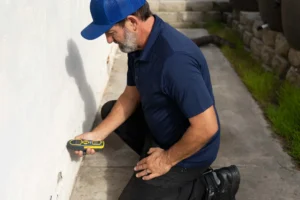
If you’re planning a renovation, demolition, or construction project in Oregon or Washington, you’ve likely encountered a confusing web of environmental testing requirements.
Both states have established strict testing and abatement regulations to protect public health. Failing to comply can result in project shutdowns, significant fines, or legal liability that far exceeds the cost of proper testing.
But with the right guidance and testing partner, compliance doesn’t have to derail your project timeline or budget. Atlas Labs, Inc. has helped property owners, contractors, and facility managers navigate these complex regulations.
Environmental hazards like asbestos, lead, and mold pose serious health risks to workers, building occupants, and surrounding communities alike:
- Asbestos fibers, when disturbed during renovation or demolition, can cause lung disease and cancer.
- Lead paint dust is especially dangerous for children and can cause developmental problems.
- Mold exposure triggers respiratory issues and allergic reactions.
This means many renovation or demolition projects require careful evaluation before work begins.
Testing Regulations in Oregon
Asbestos Testing
Oregon’s Department of Environmental Quality (DEQ) requires at least one bulk sample of material suspected to contain asbestos to be collected and analyzed at a lab before any demolition or renovation. For sprayed or troweled-on surfacing materials, at least three random bulk samples for each area must be collected.
Since 2021, each asbestos bulk sample must be analyzed by a lab that participates in a nationally recognized accreditation or testing program.
Scope of Oregon Asbestos Surveys
When complete demolition or extensive renovation is planned, Oregon asbestos testing rules require a survey of the entire facility. And when partial renovation is planned (such as a kitchen remodel), a survey is required only for that area of the structure.
Who Can Perform Asbestos Surveys in Oregon?
Under Oregon asbestos testing laws, only an accredited asbestos inspector may perform the survey and generate the asbestos survey report. This is so the person evaluating your property has the training and certification needed to identify hazards accurately and document findings properly.
Lead
Oregon lead testing laws require compliance with multiple regulatory frameworks, including the Renovation, Repair and Painting Rule, Lead Abatement and Inspection requirements, Oregon Occupational Safety and Health (OSHA) Rules, Oregon DEQ Requirements, and U.S. Housing and Urban Development (HUD) Rule.
Under these rules, certified professionals must perform lead inspections and risk assessments when required. The exact requirements that apply to your project depend on factors such as property type, age of construction, and scope of work.
Mold
Oregon mold testing laws don’t establish the same mandatory pre-renovation testing framework as asbestos regulations. However, Oregon mold testing rules related to occupational health and indoor air quality mean that discovered mold must be properly addressed.
For property owners and contractors, the practical implication is clear: identifying mold before work begins prevents surprises that can derail project timelines and budgets. When mold is found, proper testing helps determine the scope of contamination and appropriate remediation methods.
Air Quality
Under Oregon DEQ air quality testing laws, clearance testing after asbestos abatement must demonstrate that fiber levels meet established standards before workers can return to the area without respiratory protection.
Post Abatement
Oregon post abatement testing regulations require verification that abatement work meets established standards. Testing laws ensure that abatement contractors are held accountable for the quality of their work and that property owners have documentation demonstrating compliance.
This documentation protects everyone involved: workers, occupants, and property owners. And they confirm that hazards have been properly addressed.
Schedule Your Environmental Testing Today!
Leave your information below and we will be in touch!

Leave your information below and we will be in touch!
"*" indicates required fields
Testing Regulations in Washington State
Asbestos
Washington asbestos testing laws require property owners and contractors to determine whether asbestos-containing materials (ACMs) are present before any renovation, demolition, or maintenance work begins. This process, known as an asbestos Good Faith Inspection (GFI) is mandated under Washington Administrative Code (WAC) 296-62-07721.
Also under Washington asbestos testing rules, the inspector must locate, sample, and assess all suspect materials, including those hidden behind walls or ceilings. The goal is to identify any asbestos before it can be disturbed and released into the air.
When Is a Good Faith Inspection Required?
Under Washington asbestos testing regulations, a GFI is required before any activity that could disturb building materials. This includes renovations and remodels, demolitions or partial demolitions, maintenance or repair work (even minor tasks), tenant improvements, and utility upgrades.
If a contractor or property owner cannot demonstrate that a GFI was completed before work begins, Washington’s Labor & Industries (L&I) can issue stop-work orders and fines until compliance is achieved. These fines can reach $250 per day, per violation.
Who Can Perform Asbestos Inspections in Washington?
Only individuals with Asbestos Hazard Emergency Response Act (AHERA) certification, accredited under EPA guidelines, can legally perform a GFI in Washington.
These certified inspectors are trained to identify and assess suspected asbestos materials, safely collect representative samples, interpret lab results from National Voluntary Laboratory Accreditation Program (NVLAP)-accredited labs, and prepare detailed reports that meet L&I and WSDOT documentation requirements.
Are There Any Exceptions to Washington’s Asbestos Testing Requirements?
Yes, Washington asbestos testing laws do allow some limited exceptions:
- Homeowners performing construction on their own home are exempt from the GFI requirement, as long as their residence is not used for commercial purposes.
- If a regulated survey was performed at an earlier date and covers the area impacted by your planned renovation.
- Manufacturer and construction records (such as safety data sheets (SDS) or previous abatement records), may also be used in place of a GFI.
Lead
Under Washington lead testing rules, any paint applied prior to 1978 can be presumed to contain lead. There are two programs related to lead-based paint: the Renovation, Repair and Painting (RRP) program and the Lead-Based Paint Abatement (LBP) program.
Similar to its asbestos requirements, Washington lead testing laws allow property owners to either test for lead or presume its presence and treat materials accordingly.
Mold
While Washington mold testing laws don’t mandate specific pre-renovation testing (in the same way asbestos regulations do), mold can create serious health hazards and compliance construction projects. When mold is discovered during renovation, work often must stop until the contamination is properly assessed and remediated.
Washington mold testing rules related to indoor air quality and work safety may also apply when mold is present.
Air Quality
Washington air quality testing regulations establish standards for airborne contaminants, including asbestos fibers and other particulates.
During abatement projects, testing rules may require continuous air monitoring so that containment measures are working effectively, and that fibers aren’t escaping into surrounding areas.
Post Abatement
Washington post abatement testing regulations require verification that abatement work has been completed successfully and that the area is safe for reoccupancy or continued construction. Under testing laws, air clearance testing is typically required after asbestos abatement to verify that fiber levels meet acceptable standards.
For lead abatement, dust wipe sampling is used to confirm that surfaces are safe. These tests must be performed by certified professionals and analyzed by accredited labs.
Why You Should Work With Certified Environmental Testing Professionals
Navigating Oregon’s and Washington’s full range of environmental testing requirements is much easier with the right partner. They provide the expertise and documentation you need to move forward with confidence, knowing your project meets all applicable regulations.
Take the Next Step With Atlas Labs, Inc.
Testing is a critical first step when you’re planning a renovation, demolition, and every project in between. Oregon and Washington testing requirements protect your workers, building occupants, and projects from costly complications.
So don’t let regulatory uncertainty hold your project back. Contact Atlas Labs, Inc.’ team of certified environmental testing professionals today to get started.