
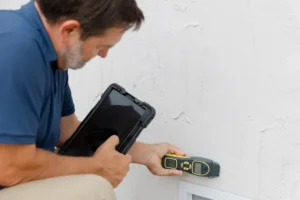
If you own a home in Oregon or Washington, you might be sitting on hidden health hazards without even knowing it. Asbestos, lead paint, mold, and poor indoor air quality can lurk behind walls, under floors, and in the air you breathe every day. At Atlas Labs, Inc., we’ve spent over 50 years helping Pacific Northwest homeowners uncover and address these hidden dangers.
Our team of certified experts is here to help whether you’re planning a kitchen remodel, preparing to sell your home, or simply want peace of mind about what’s in your living space. We provide comprehensive asbestos testing, lead testing, mold testing, and indoor air quality testing for PNW homes: all under one roof.
How Environmental Testing Works (& What to Expect)
At Atlas Labs, Inc., we follow established protocols that ensure accurate results while minimizing disruption to your home and daily life:
- Every assessment begins with a thorough property evaluation. Our specialists examine your home’s structure, taking into account when it was built and identifying locations where hazardous materials are commonly found.
For asbestos, this means looking at textured ceilings, pipe insulation, floor tiles, and similar materials. For lead, we focus on painted surfaces like window sills, door frames, and trim work. And for mold and indoor air quality testing, we examine areas where moisture problems are likely: basements, bathrooms, around windows, and anywhere water damage has occurred.
- Sample collection comes next. Our technicians use specialized equipment to gather samples without spreading contamination.
For asbestos, we might employ optical equipment to analyze fiber characteristics in materials like floor tiles or pipe wrap. For lead testing, we use XRF analyzers that provide instant readings or collect paint chip samples for more detailed analysis. Mold testing involves collecting surface samples, air samples, or both, depending on the situation.
Surface testing helps us detect contamination that might not be visible. We collect settled dust through various methods, including adhesive lifts, swabs, or specialized vacuums. This reveals whether asbestos fibers or lead dust have spread beyond their original locations.
- All samples go to certified laboratories for precise analysis. Our advanced techniques ensure accurate measurements that you can trust.
For asbestos, lab testing identifies whether fibers are present and classifies them by type. Lead samples undergo analysis to determine concentration levels. Mold samples identify specific species and quantities present.
- Finally, we assemble everything into comprehensive reports.
These documents detail exactly where we found hazardous materials, what condition they’re in, and what types are present. More importantly, our reports include management strategies and recommendations for next steps. After your survey, you’ll have the information needed to create specific removal plans or management approaches that help make your indoor spaces safer.
How Long Does Testing Take?
The on-site assessment itself usually takes a few hours for a typical single-family home, though larger properties or more complex situations may require more time. Most homeowners receive their complete reports within a week of the on-site visit, though rush options can accelerate this significantly.
After sample collection, laboratory analysis typically requires several business days. The exact timeline depends on the types of tests ordered and current lab workloads. Once lab results are in, we compile everything into your comprehensive report. This documentation includes all findings, recommendations, and any required regulatory paperwork.
But for situations that can’t wait, we offer rush service with same-day results for urgent cases. This option costs more, but can be essential when project deadlines or safety concerns demand immediate answers. So if you’re facing a tight timeline, let us know when you schedule your appointment so we can discuss options.
We understand that you have other demands on your time and try to minimize disruption. Our specialists work efficiently while being thorough.
How Much Does It Cost?
The cost of environmental testing varies based on several factors:
- Property Size: A small bungalow requires less time and fewer samples than a large farmhouse. More square footage means more potential locations for hazardous materials and more area to assess for mold and air quality concerns.
- Property Age & Construction Type: Older homes often have more materials that need evaluation. Homes built in certain eras used specific materials that require particular attention. Complex construction with multiple additions or renovations over the years may require more thorough investigation.
- Scope: A simple asbestos survey before a small renovation project costs less than comprehensive testing for asbestos, lead, mold, and indoor air quality throughout an entire home. However, bundling multiple types of testing through one company often provides better value than hiring separate specialists for each concern.
- Number of Samples Collected and Analyzed: Some situations require more samples to accurately characterize conditions throughout a property. Our specialists collect enough samples to give you accurate results without unnecessary expense.
- Turnaround Time: Standard timelines cost less than rush service. If your situation allows for normal processing, you’ll save money compared to same-day results.
- Geographic Factors: Properties in remote areas or those requiring special access arrangements may involve additional considerations.
When you contact Atlas Labs, Inc. for asbestos testing for Oregon homes, lead testing for Oregon homes, mold testing for Oregon homes, or any of our other services, we’ll provide clear pricing before any work begins. We believe in transparency about costs so you can make informed decisions.
Schedule Your Environmental Testing Today!
Leave your information below and we will be in touch!

Leave your information below and we will be in touch!
"*" indicates required fields
Why Environmental Testing Matters for Your Home
Many homeowners don’t think about environmental hazards until it’s too late. Maybe you’ve started a renovation project and discovered suspicious materials. Or perhaps someone in your family has developed unexplained respiratory issues. These situations happen more often than you might expect, and they highlight why testing is so important.
Asbestos
Breathing in asbestos dust harms the body and can lead to serious diseases like mesothelioma. This aggressive cancer can take decades to develop, which means exposure that happened years ago could affect your health today.
Asbestos was commonly used as insulation in homes from the 1930s to the 1950s. It showed up in floor tiles, hot water pipes, roofing materials, and even textured paints and patching compounds until 1977.
So if your home was built before 1989, when the EPA banned asbestos in new construction, there’s a real chance these materials are present.
Lead
Lead exposure is especially dangerous for children. It can result in developmental delays, learning difficulties, and serious health concerns that last a lifetime. The paint itself isn’t always the problem, it becomes dangerous when it chips, peels, or gets disturbed during renovations.
Lead-based paint was common in homes built before 1978, when federal rules finally banned it in residential properties. You might find lead paint on walls, windows, doors, and other painted surfaces in older buildings.
Mold
Mold presents its own set of challenges for Pacific Northwest homeowners. Our region’s wet climate creates perfect conditions for mold growth. So testing for PNW homes helps identify problem areas before they become major issues.
Mold can trigger allergies, worsen asthma, and cause respiratory infections. Some types of mold produce toxins that can lead to more serious health effects.
Poor Indoor Air Quality
Poor indoor air quality ties all these concerns together. The air inside your home can contain particles from asbestos, lead dust, mold spores, and other contaminants.
Indoor air quality testing for PNW homes gives you a complete picture of what you and your family are breathing.
How Do You Know When Testing Is Needed?
While every situation is different, certain circumstances strongly suggest that professional assessment is warranted:
- Planning any major remodeling project is one of the clearest triggers for testing. Cutting, sanding, drilling, and removing materials can release asbestos fibers and lead dust into the air. What might seem like a simple weekend project can quickly become a health hazard if you don’t know what you’re working with. Asbestos testing and lead surveys should happen before any work begins that could disturb suspect materials.
- Preparing for building demolition absolutely requires testing. Both Oregon and Washington have specific requirements for pre-demolition surveys, and failing to comply can result in significant penalties.
- Buying or selling a property often involves environmental testing. Federal law requires sellers to disclose known lead paint hazards, and many buyers request additional testing as part of their due diligence. Having current test results can smooth the transaction process and help you negotiate from a position of knowledge.
- If you’re a landlord, tenant turnover provides an opportunity to assess your property’s condition. This protects both you and your incoming tenants from unknown hazards.
- Visible damage or deterioration in older homes should prompt testing. Crumbling insulation, peeling paint, water stains, and musty odors all suggest that hazardous materials might be released into your living space. The EPA specifically advises testing damaged, deteriorating, or friable materials through qualified professionals.
- Unexplained health symptoms sometimes lead homeowners to investigate their indoor environment. While many factors can cause respiratory issues, allergies, and other health problems, poor indoor air quality is worth ruling out. Indoor air quality testing for PNW homes can identify whether environmental factors in your home might be contributing to symptoms.
What PNW Homeowners Need to Know Before Remodeling or Demolishing
Oregon and Washington have specific rules designed to protect both workers and residents from environmental hazards. Skipping required surveys doesn’t just put your health at risk. It can also lead to costly fines and project delays.
Oregon
- In Oregon, an asbestos survey is required before any demolition or renovation on residential buildings constructed before 2004.
- The Department of Environmental Quality oversees asbestos work throughout the state. They require that survey reports remain on-site for the entire duration of your renovation or demolition project.
- You must also provide the report to the DEQ upon request.
- The Oregon Health Authority tracks lead paint rules and runs programs to prevent childhood lead poisoning. So the state follows the federal Renovation, Repair, and Painting rule for lead. This means certified contractors must use lead-safe work practices in homes built before 1978.
- Property owners must also disclose known lead paint hazards to tenants and buyers.
Washington State
- Washington State takes an even broader approach to asbestos testing for Washington homes.
- An asbestos survey is required for any building before demolition, renovation, remodeling, or maintenance work that could disturb asbestos-containing materials. This applies regardless of the building’s age.
- Surveys must be performed by an inspector certified under the Asbestos Hazard Emergency Response Act.
- Washington also follows the EPA’s requirements for lead paint and requires property owners to provide tenants with EPA-approved pamphlets about lead hazards.
- Any known lead-based paint must be disclosed in rental agreements.
- Lead testing for Washington homes must be conducted by inspectors or risk assessors certified by the EPA.
- Requirements can also change by county or local air authority.
While mold doesn’t have the same strict regulatory framework as asbestos and lead, that doesn’t mean you should ignore it. Mold testing for Oregon homes and throughout Washington helps you identify problems that could affect your family’s health and your home’s value.
Many buyers now request mold inspections as part of real estate transactions, and addressing mold issues before listing can make your home more attractive to potential buyers.
At Atlas Labs, Inc., we help you understand exactly which rules apply to your specific project so you can stay compliant and avoid problems.
Protect Your Family and Home
Your home is likely your most valuable asset, and your family’s health is priceless. Environmental testing protects both. Skipping property surveys puts building occupants at risk for asbestos-related illnesses and lead poisoning. A professional assessment helps you stay compliant with regulations and avoid costly fines while also giving you the information needed to create safer living spaces.
At Atlas Labs, Inc., preserving the health of you and your building’s occupants is our primary objective. Our team is fully committed to improving the safety conditions of your home. As consultants, we give clear advice on your options when we find a health risk. It’s important to note that we do not perform remediation work.
Contact us today for more information or to schedule an appointment. You can also drop off a sample at one of our convenient locations.