
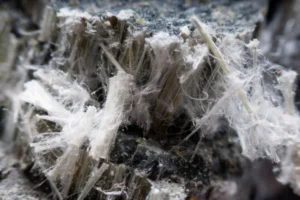
No level of asbestos exposure is considered safe. But the full picture is more complex. Once inside your lungs, asbestos fibers can become permanently trapped in your body’s tissues. Over time, these fibers irritate and damage cells, which can lead to serious and sometimes fatal diseases.
This is how asbestos is harmful: not through skin contact or ingestion, but primarily through inhalation of these tiny, sharp fibers that your body cannot break down or expel.
The problem begins when asbestos-containing materials (ACMs) are disturbed. When these materials break down, get drilled into, or crumble with age, they release microscopic fibers into the air. These fibers are so small that they’re invisible to the naked eye. And once airborne, they can be easily inhaled.
Asbestos is a naturally occurring mineral that was widely used throughout the 20th century in building materials because of its durability, heat resistance, and insulating properties. You can find it in everything from floor tiles and insulation to roof shingles and pipe wrapping.
Is Asbestos Harmful to Everyone?
Not everyone who is exposed to asbestos will develop mesothelioma or other related diseases. However, because there is no determined safe level of exposure, all contact with asbestos fibers should be avoided whenever possible.
Several factors influence individual risk, including:
- The dose and duration of exposure. Higher concentrations of fibers and longer exposure periods increase danger.
- The type of asbestos. Some fiber types are considered more hazardous than others.
- Personal health factors, like age, smoking history, and pre-existing lung conditions, can heighten susceptibility.
When Can Asbestos Be Dangerous?
The answer depends largely on the condition of the material and whether it’s being disturbed. Asbestos that remains intact and undisturbed in a building generally poses a lower immediate risk.
However, asbestos becomes dangerous the moment those materials are damaged, deteriorated, or disturbed during activities like renovation, demolition, or even routine maintenance. This is why testing before any remodeling project is so critical.
Common scenarios where asbestos exposure can occur include:
- Renovation work where drilling or sanding releases old insulation fibers.
- Disaster cleanup after events like fires or storms that damage older building materials.
- Workplace accidents where ceiling tiles fall or boiler wrapping gets chipped.
- Shaking out work clothes that have collected asbestos dust.
Leave your information below and we will be in touch! Leave your information below and we will be in touch! "*" indicates required fieldsSchedule Your Environmental Testing Today!

Effects of Short-Term & Long-Term Asbestos Exposure
Short-term asbestos exposure typically carries lower risk than repeated, long-term exposure. But that doesn’t mean it’s safe. A single brief encounter with asbestos in a well-ventilated area where the material remains mostly intact is generally considered less concerning.
However, a single intense exposure in an enclosed space with visible dust and no respiratory protection is a very different situation. Even one day of working near disturbed materials without proper safety equipment can result in significant fiber inhalation.
It’s worth noting that OSHA has confirmed cases where exposures lasting only a few days eventually led to mesothelioma diagnoses. While this isn’t the most common outcome, it demonstrates that even short-term exposure should be taken seriously.
The most severe asbestos health effects typically result from repeated, long-term exposure over months or years.
This is why certain occupations carry particularly high risks. Workers in mining, milling, shipyards, construction, and building maintenance (especially those who worked with asbestos products before the late 1970s) face the greatest danger.
When we talk about how deadly asbestos is, we’re primarily referring to three major diseases: mesothelioma, asbestosis, and lung cancer.
- Mesothelioma is a rare and aggressive cancer that develops in the lining of the lungs, abdomen, or heart. It is almost exclusively caused by asbestos exposure and is usually diagnosed decades after the initial exposure occurred.
- Asbestosis is a chronic lung disease caused by the scarring of lung tissue from inhaled asbestos fibers. Over time, this scarring makes it increasingly difficult to breathe. In advanced cases, asbestosis can cause a condition called clubbing, where the fingertips and toes appear wider and rounder than normal.
- Lung cancer is another serious risk for those with significant asbestos exposure. When combined with smoking, the risk increases dramatically. While smoking alone doesn’t cause mesothelioma, it severely compromises lung health and amplifies the asbestos health risks for those who have been exposed.
Symptoms of Inhaling Asbestos: What to Watch For
If you know or suspect you’ve been exposed to asbestos at any point in your life, it’s important to monitor your health and communicate your exposure history to your doctor. Symptoms that warrant medical attention include:
- Unexplained shortness of breath
- A persistent cough that doesn’t go away
- Chest pain or tightness
- Abdominal pain or swelling
- Unexplained weight loss
These symptoms don’t necessarily mean you have an asbestos-related disease, but they should be evaluated by a healthcare professional who knows your exposure. Early detection can make a significant difference in treatment options and outcomes.
One of the most challenging aspects of asbestos-related diseases is that symptoms of inhaling asbestos may not appear for 20 to 60 years after exposure. This means that many people don’t connect their health problems to an exposure that happened decades earlier.
What to Do If You’ve Been Exposed to Asbestos
If you believe you’ve been exposed to asbestos, there are several steps you should take to protect your health:
- Start by noting the details of the exposure: where it happened, what you were doing, how long you were exposed, whether you noticed any dust, and whether you were wearing any protective equipment.
- Also note who else was present and whether the exposure was work-related, school-related, or occurred in another setting.
- Bring this information to your doctor and ask that it be added to your medical file.
- Going forward, the most important thing you can do is avoid further exposure.
How Professional Testing Protects You & Your Family
Many building materials that contain asbestos look identical to materials that don’t. You simply cannot tell whether a floor tile, insulation, or textured ceiling contains asbestos just by looking at it. Getting a lab analysis is the best way to know for certain.
For homeowners and property managers throughout Oregon and Washington, professional asbestos testing provides the clarity you need before starting any renovation or demolition project. Testing identifies exactly which material in your building contains asbestos, allowing you to make informed decisions about how to proceed safely.
If asbestos is found, you’ll have options. In some cases, materials can be safely left in place if they’re in good condition and won’t be disturbed. In other situations, professional abatement may be necessary. Either way, you’ll have the information you need to protect your family, tenants, workers, and yourself.
Take the First Step Toward Peace of Mind
The evidence is clear that asbestos exposure can be dangerous, especially when disturbed or inhaled. But danger doesn’t have to mean uncertainty. With professional testing, you can find out exactly what’s in your building and take appropriate action to keep everyone safe.
Atlas Labs, Inc. serves communities throughout Oregon and Washington, providing accurate, reliable asbestos testing and the guidance you need to make smart decisions for your property.
So contact us today to schedule professional asbestos testing and take the first step toward protecting your health and peace of mind. You can also submit a sample at one of our convenient drop off locations.