
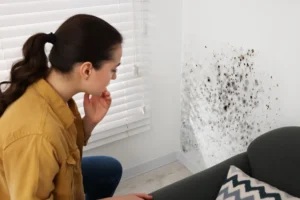
If you find mold, your best course of action is to track the moisture source and get the mold tested before you try to scrub it away. You should reach out for professional testing help immediately if you notice recurring mold in the same area despite cleaning, water stains without an obvious explanation, or a musty smell with no visible source.
At Atlas Labs, Inc., we provide both tape testing and air testing to give you exact answers. Our experienced technicians use specialized equipment to draw in a specific volume of air, capturing airborne particles and hidden mold spores. We test one indoor sample, one outdoor sample to compare normal natural levels, and can even test the air near your furnace.
What to Do If You Found Mold in Your Home
- Don’t disturb it. Your first instinct might be to grab cleaning supplies and scrub the mold away. However, disturbing mold can release spores into the air, potentially spreading the problem and increasing your exposure. Until you know what you’re dealing with, it’s best to leave visible mold alone.
- Identify potential moisture sources. Look for obvious leaks, check for condensation issues, and note any areas of water damage or staining. This information will be valuable when addressing the root cause.
- Contact a professional for testing. Professional mold testing provides crucial information that visual inspection alone can’t offer. You’ll learn what types of mold are present, how concentrated they are in your air and on surfaces, and get documentation that can inform remediation decisions, support insurance claims, or provide evidence for real estate transactions.
- Plan for remediation. Once you have testing results, you’ll be equipped to make informed decisions about next steps. Small areas of mold on non-porous surfaces can sometimes be addressed by homeowners, but larger problems, mold in HVAC systems, and mold affecting porous materials like drywall typically require professional remediation. Your testing results will help guide this decision.
What Does Mold Look Like?
Mold can appear black, green, gray, white, brown, or even orange or pink depending on the species and what it’s growing on. It might look fuzzy, slimy, powdery, or like a simple stain or discoloration. Sometimes what looks like dirt or soot is actually mold growth.
However, color alone doesn’t tell you whether mold is dangerous. That’s why professional testing matters. Our lab can identify common mold types found in Oregon and Washington homes, including Stachybotrys (black mold), Aspergillus, Cladosporium, and Penicillium. Each has different characteristics and potential health impacts.
If you’ve found something suspicious in your home, don’t assume it’s harmless because it isn’t black. And don’t assume it’s extremely dangerous just because it is. Testing provides the clear answers you need to make informed decisions.
How to Tell if You Have a Mold Problem
Sometimes mold makes itself obvious. You might spot dark patches on bathroom walls, notice fuzzy growth on basement surfaces, or see discoloration spreading across a ceiling. But mold isn’t always visible. In fact, some of the most significant mold problems in PNW homes are hidden behind walls, under flooring, or tucked away in attics and crawlspaces where homeowners rarely look.
So how do you know if you have an issue when you can’t see it?
- Unexplained Musty Odors: Pay attention to how the smell changes as you move through your home. Does it get stronger near certain walls, in the basement, or when your HVAC system kicks on? These clues can help identify where mold might be hiding.
- Health Symptoms That Improve When You Leave: Children, elderly family members, and those with asthma, allergies, or weakened immune systems tend to be more sensitive to mold. If someone in your household falls into these categories and has been experiencing unexplained symptoms, it’s especially important to investigate whether mold might be present in your home.
- Visible Signs of Water Damage: Don’t forget to check around windows and exterior walls, where condensation commonly builds up in PNW homes during our cooler, wetter months. Excess moisture on windows is a warning sign that humidity levels in your home may be high enough to support mold growth.
Is Mold Dangerous?
The short answer is yes, mold can be dangerous on multiple fronts.
Mold affects people differently depending on their sensitivity, overall health, and the type and amount of mold present. For some, exposure causes mild symptoms like a stuffy nose or itchy eyes. For others (particularly those with asthma, allergies, or compromised immune systems), the effects can be much more serious.
Your furry family members can be affected by mold too. Dogs and cats can experience respiratory issues, allergic reactions, and other health problems from mold exposure. Since pets often spend more time at home than we do and may frequent areas like basements or crawlspaces where mold commonly grows, they can sometimes be exposed to higher levels than their human companions.
Beyond health concerns, mold poses a real threat to your home itself. Mold feeds on organic materials, and over time, it can weaken and destroy wood framing, drywall, insulation, carpet, and other building materials. What starts as a small, hidden mold problem can grow into major structural damage that’s expensive to repair.
Schedule Your Environmental Testing Today!
Leave your information below and we will be in touch!

Leave your information below and we will be in touch!
"*" indicates required fields
Where Mold Hides in PNW Homes
While mold can grow almost anywhere moisture accumulates, certain areas in our regional homes are particularly vulnerable:
- Crawlspaces & Basements
- Attics
- Bathrooms & Kitchens
- Windows & Exterior Walls
- Laundry Rooms & Utility Areas
How to Prevent Mold From Growing and Spreading
Prevention is always easier and less expensive than dealing with an established mold problem. Here’s how to make your PNW home less hospitable to mold growth:
- Control moisture at the source. This is the single most important thing you can do. Repair roof leaks, plumbing problems, and foundation drainage issues as soon as you discover them. Keep gutters and downspouts clear so water drains away from your home rather than pooling near the foundation. Check that the ground around your home slopes away from the structure.
- Manage indoor humidity. Aim to keep indoor humidity levels between 30-50%. Use dehumidifiers in naturally damp spaces like basements and crawlspaces. Run exhaust fans during and after showering, bathing, and cooking. And make sure those fans vent outdoors, not into attics or crawlspaces. On days when weather permits, open windows to promote air circulation.
- Maintain your home’s ventilation systems. Good airflow helps prevent moisture from accumulating on surfaces. Make sure your attic has adequate ventilation. Keep HVAC filters clean and have your system maintained regularly. Ensure crawlspace venting is adequate and that vapor barriers are intact.
- Address water damage immediately. If you experience any flooding, leaks, or water intrusion, time is critical. Clean and thoroughly dry affected areas within 24-48 hours. Materials that can’t be dried completely (like carpet padding, insulation, or drywall that has been saturated) should be removed and replaced. Quick action can prevent a water event from becoming a mold problem.
- Stay vigilant. Regular inspection of vulnerable areas helps catch problems early. Check your attic, crawlspace, basement, and areas under sinks periodically for signs of moisture or mold. Pay attention to musty odors and investigate them promptly. When in doubt, professional testing can give you certainty about your home’s condition.
When to Call for Professional Mold Testing
You should strongly consider professional mold testing if you notice any of the following situations:
- A musty smell persists, but you can’t find a visible source. Mold often grows in hidden locations like inside walls, under flooring, or in ductwork. Testing can confirm whether mold is present even when you can’t see it.
- Mold keeps coming back in the same area despite cleaning. This usually indicates an underlying moisture problem that hasn’t been resolved. Testing and thorough inspection can help identify the root cause.
- You see water stains or discoloration that doesn’t have an obvious explanation. These may indicate past or ongoing moisture intrusion that could be feeding hidden mold growth.
- Walls, floors, or ceilings feel soft, appear warped, or show bubbling. These are signs of moisture damage that often accompanies mold growth.
- You or family members experience health symptoms that improve when away from home. This pattern strongly suggests that something in your indoor environment (potentially mold) is affecting your health.
- You’ve recently experienced water damage from a flood, leak, or other event. Even if you’ve cleaned up the visible water, testing can confirm whether mold has begun to develop.
- You’re buying or selling a home and want documentation of its condition. Testing provides official results that protect all parties in a real estate transaction.
Atlas Labs, Inc. Gets You the Answers You Need
You deserve to know that the air you’re breathing is healthy and that your home is free from mold problems that could affect your wellbeing or damage your property.
At Atlas Labs, Inc., we provide fast, accurate mold testing services throughout Oregon and Washington, including Portland OR, Vancouver WA, and Salem OR. Our experienced technicians use sophisticated technology and thorough testing procedures to give you a complete picture of what’s happening in your home.
So don’t spend another day wondering about that musty smell or worrying whether the mold you found is dangerous. Get the clear answers that let you take control of the situation and protect your family’s health.
Contact Atlas Labs, Inc. today to schedule your mold testing or find a convenient drop-off location for your samples. We’re here to help you breathe easier.