
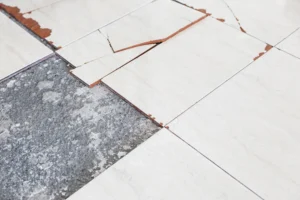
If you own an older home or building in Oregon or Washington, there’s a good chance your flooring could contain asbestos. Atlas Labs, Inc. has tested thousands of flooring samples for asbestos. We know how confusing it can be to figure out whether your old tiles, vinyl, or linoleum might put you at risk.
Asbestos is a naturally occurring mineral made up of tiny, flexible fibers. These fibers are incredibly strong, resist heat, and don’t conduct electricity. For flooring companies, asbestos was a dream material. It made floors more durable, fire-resistant, and affordable to produce.
From the 1920s through the 1990s, asbestos was a common ingredient in many types of flooring products. Manufacturers added it to floor tiles, sheet flooring, backing materials, and even the glue used to stick everything down. At the time, nobody realized just how dangerous these microscopic fibers could be when they become airborne.
The problem is that asbestos in vinyl flooring, asbestos in linoleum flooring, and asbestos in tile adhesive can all release harmful fibers when the materials get old, damaged, or disturbed. Once these fibers float into the air, you can breathe them into your lungs without even knowing it. Over time, this exposure can lead to serious health problems, including lung cancer and mesothelioma.
What Types of Flooring Can Contain Asbestos?
Vinyl Floor Tiles
Asbestos vinyl floor tiles were extremely popular from the 1950s through the early 1980s. These tiles were often installed in kitchens, bathrooms, basements, and commercial buildings.
If you have asbestos tiles in basement areas or other parts of your home, they may still be in good condition. However, vinyl-asbestos tiles tend to become very brittle with age. When they crack or break, they can release dangerous fibers.
Vinyl Sheet Flooring
Asbestos in linoleum sheet flooring (and vinyl sheet flooring) is particularly tricky because the asbestos fibers aren’t always in the top layer that you can see. Instead, manufacturers often put asbestos in the backing material underneath. This backing layer made the floor more comfortable and resilient to walk on. The problem is that this backing is often “friable,” meaning it crumbles easily and releases fibers.
If you peel up old sheet flooring or if the top layer deteriorates, you could expose yourself to asbestos without realizing it.
Flooring Adhesive
Even if your floor tiles themselves don’t contain asbestos, the glue holding them down might. Asbestos in tile adhesive was extremely common until the 1990s. The most recognizable type is called “black mastic.”
If you pull up an old tile and see dark brown or black adhesive underneath, you should be highly suspicious. Testing vinyl flooring for asbestos should always include testing the adhesive as well.
Flooring Felt & Backing
Asbestos felt was often used as a protective layer underneath various types of flooring. It also served as backing material for asphalt tiles, linoleum, and vinyl. This means that asbestos under tile might be present even when the tile itself is asbestos-free.
When testing for asbestos in floor tile, it’s important to check all layers of the flooring system, not just the top surface.
A Note on Laminate Flooring
Many homeowners ask about asbestos in laminate flooring. Modern laminate flooring does not contain asbestos. However, if laminate was installed over older flooring materials, there could still be asbestos underneath. Additionally, some older products that looked similar to laminate may have contained asbestos.
When in doubt, professional asbestos tile testing is the safest approach.
When Was Asbestos Most Commonly Used in Flooring?
Asbestos-containing flooring was manufactured from the 1920s through the 1990s. However, the “golden era” of asbestos flooring was from about 1950 to 1980. During this period, nearly every major flooring manufacturer used asbestos in at least some of their products.
The use of asbestos in new products was significantly restricted by the late 1980s, though it wasn’t fully banned in the United States until 2019. And even then, some exceptions exist. This means that asbestos-containing materials remained available for purchase and installation longer than many people realize.
Who Made Asbestos Flooring?
Many major flooring manufacturers produced asbestos-containing products during the twentieth century. Some of the most well-known companies include:
- Armstrong World Industries
- Congoleum Corporation
- Kentile Floors
- GAF Corporation
Other manufacturers of asbestos flooring include:
- American Biltrite
- American Olean Tile Company
- Amtico Floors
- EverWear Inc.
- Fibreboard Corporation
- Flintkote Company
- Goodyear
- Montgomery Ward
- Sears-Roebuck
How to Tell if Tiles Are Asbestos: Signs to Watch For
Age of Your Home
If your home was built before 1980, you should treat any original flooring as potentially containing asbestos until testing proves otherwise. This is especially true for nine-inch by nine-inch floor tiles, which were the standard size during the peak years of asbestos flooring production. However, twelve-inch and 18-inch tiles from this era can also contain asbestos.
Tile Size
The “9-inch rule” is one of the most well-known guidelines for how to identify asbestos in flooring. During the mid-twentieth century, 9×9 inch tiles were the industry standard. Most tiles of this size from that era contain asbestos. However, this rule isn’t foolproof. Some early non-asbestos tiles were made in 9×9 sizes, and some asbestos tiles were produced in 12×12 sizes well into the late 1970s and early 1980s.
Black Adhesive
If you can see the adhesive under your tiles (whether through a crack, at an edge, or where a tile has come loose), pay attention to the color. Black or dark brown mastic is a strong indicator of asbestos. This dark adhesive was commonly used with asbestos tiles, and the mastic itself often contained asbestos fibers.
Damage & Deterioration
If your floor tiles are cracking, peeling, crumbling, or turning into a powdery mess, this is cause for concern. Damaged asbestos flooring is more likely to release fibers into the air. In broken or deteriorated tiles, you may even be able to see small fibers or fiber bundles, though the most dangerous fibers are often invisible to the naked eye.
Schedule Your Environmental Testing Today!
Leave your information below and we will be in touch!

Leave your information below and we will be in touch!
"*" indicates required fields
Health Risks of Asbestos in Flooring
When asbestos fibers become airborne, they’re easy to breathe in. These tiny particles can lodge deep in your lungs, where your body cannot break them down or remove them.
Over time, this can lead to these serious and often fatal health conditions:
- Asbestosis is a chronic lung disease caused by inhaling asbestos fibers. It leads to scarring of the lung tissue, which causes shortness of breath, chronic coughing, and chest pain. Asbestosis typically develops after prolonged exposure and may not show symptoms until decades later.
- Mesothelioma is a rare and aggressive cancer that affects the lining of the lungs, abdomen, or heart. It is almost exclusively caused by asbestos exposure. Unfortunately, mesothelioma is often not diagnosed until it has reached advanced stages, making it very difficult to treat.
- Lung cancer can also result from asbestos exposure, particularly in combination with smoking. People who are exposed to asbestos and who smoke have a significantly higher risk of developing lung cancer than either factor alone would cause.
Other potential health effects include cancers of the larynx, ovaries, and other organs. Difficulty breathing, persistent coughing, and chest tightness can all be signs of asbestos-related illness, though these symptoms typically appear years or even decades after exposure.
Who Is Most at Risk for Asbestos Exposure from Flooring?
While anyone can be exposed to asbestos from flooring, certain groups face higher risks.
DIY home renovators are particularly vulnerable because they may not realize their old flooring contains asbestos before they start tearing it up. Flooring installers and custodians who work with older buildings also face increased exposure risks.
If you’re planning a renovation project that involves disturbing old flooring (whether that means scraping, sanding, or demolition), you should absolutely test for asbestos first. This is required by law in Oregon and Washington.
What to Do if You Suspect Asbestos in Your Flooring
- Leave undamaged flooring alone. If your flooring is in good condition and you’re not planning any renovations, the EPA often recommends simply leaving it in place. Intact asbestos flooring poses minimal risk.
- Seal off damaged areas. If you notice cracked, crumbling, or deteriorating flooring, limit access to that area. Prevent foot traffic that could further damage the material and release more fibers.
- Get professional testing. Before you make any decisions about your flooring, you need to know what you’re dealing with. Professional asbestos testing for flooring and tiles will give you definitive answers.
- Consult with experts. Once you have your test results, you can make informed decisions about whether to encapsulate (cover) the flooring, have it professionally removed, or simply leave it alone with careful monitoring.
What Not to Do
- Don’t sand, scrape, or drill into flooring you suspect contains asbestos. These activities release fibers into the air and dramatically increase your risk of exposure.
- Don’t sweep or vacuum debris from damaged flooring. Regular vacuums don’t have filters capable of trapping asbestos fibers, which means you’ll just spread them around and make them easier to breathe in.
- Don’t try to remove the flooring yourself without proper training and equipment. DIY removal of asbestos flooring is extremely dangerous and may also be illegal in your area.
- Don’t assume your flooring is safe just because it looks okay. Even flooring that appears to be in good condition can contain asbestos and become dangerous during renovation or demolition.
How to Test Tiles for Asbestos
When it comes to asbestos tile testing, professional laboratory analysis is the gold standard. While DIY testing kits exist, they can be unreliable and may put you at risk of exposure during the sampling process. And if you’re working with a contractor in Oregon or Washington, the sample must be collected by an AHERA-certified building inspector. It’s the law.
At Atlas Labs, Inc., our asbestos floor testing process is designed to be thorough yet minimally invasive. Here’s how it works:
Sample Collection
When testing flooring for asbestos, it’s important to collect samples that include all layers of the material. This means we’ll get samples of the tile itself, any adhesive underneath, and any backing or felt materials present.
If you’re bringing in a sample yourself, place the suspect material in a sealable sandwich bag. The sample should be approximately thumbnail size, up to two inches by two inches at the largest. Make sure to select an area that includes all layers that need to be tested.
Lab Analysis
Once samples arrive at our state-of-the-art testing laboratory, we analyze them using Polarized Light Microscopy (PLM). This proven method allows us to accurately identify asbestos fibers in various materials. Our lab is AHERA-certified, ensuring that our testing meets the highest standards.
Results & Reporting
We understand that waiting for results can be stressful, especially if you have a renovation project on hold. That’s why we offer multiple turnaround options. You can choose from rush service (same day with a 2 PM deadline), next-day, two-day, or five-day results depending on how quickly you need your answers. Keep in mind that faster results do come with higher testing costs.
Once testing is complete, we provide you with a detailed report of our findings. If asbestos is detected, you’ll have the information you need to make informed decisions about next steps.
Get Professional Testing from Atlas Labs, Inc.
Don’t let uncertainty about asbestos put your health at risk. Atlas Labs, Inc. makes asbestos testing for flooring simple, fast, and affordable. Our AHERA-certified inspectors collect samples carefully, and our state-of-the-art PLM laboratory provides accurate results you can trust.
With convenient sample drop-off locations in Portland OR, St. Helens OR, Salem OR, and Vancouver WA, plus same-day rush options available, you can get answers as soon as today.
Call us at 503-430-5290 today to schedule asbestos testing for your flooring, or visit one of our drop-off locations to bring in your sample.